002 / GRADUATION PROJECT / 2026
Man–Machine Technology & Infrastructure Collaboration Institute
A Prospective Institutional Typology for Human–Machine Collaboration
ManMaTIC is a prospective institutional typology that explores how humans, intelligent machines, data systems, and technological infrastructure could operate within one shared architectural environment. The project constructs a spatial framework through which emerging forms of collaboration can be tested, negotiated, governed, and adapted over time.
02 / STUDY
STUDYING A MOVING SUBJECT
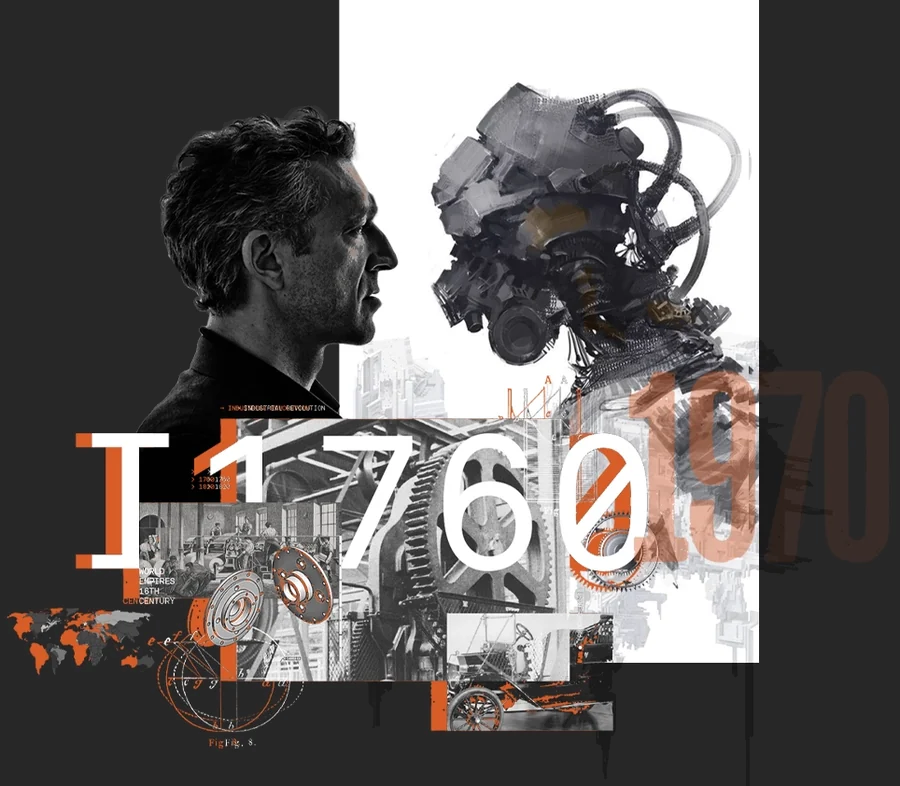
Machine systems, artificial intelligence, automation, and data infrastructures are evolving faster than conventional architectural research methods can fully examine.
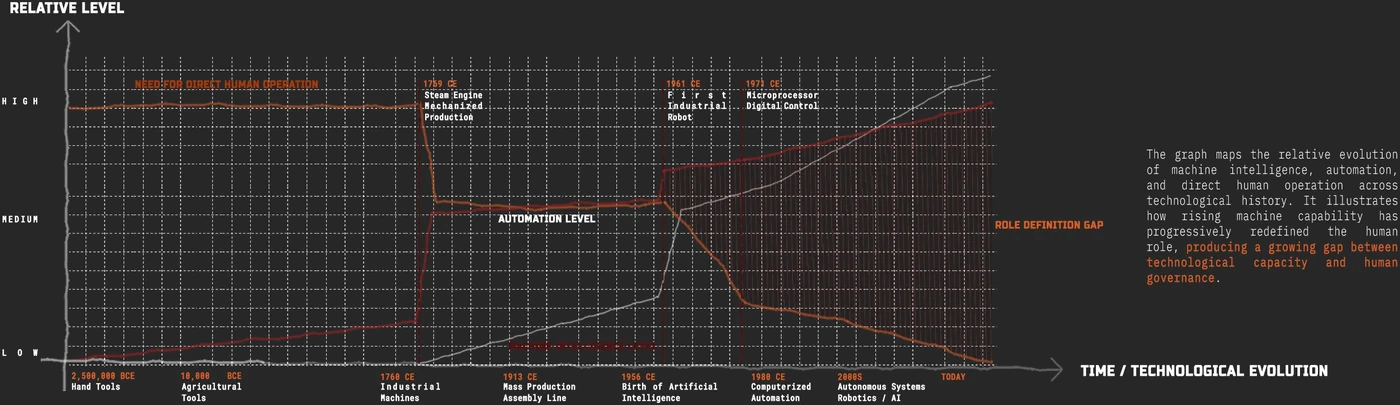
ManMaTIC began from this methodological paradox: How can architecture study and design for human–machine integration while the subject itself continues to change?
03 / IMPLICATION
THE ARCHITECTURAL IMPLICATION
Most buildings are still conceived primarily around human occupation, while machines, data systems, and technological infrastructure are accommodated as supporting systems. As machines continue to evolve in capability, presence, and their relationship with human activity, architecture may no longer remain organized in the same way. What might architecture become through this evolution, and what place will the human occupy within it?
04 / THEORY
THEORETICAL FRAMEWORK
Reading this condition architecturally required looking beyond the machine itself and examining the wider network of human and non-human actors involved.
05 / RELATIONAL NETWORK
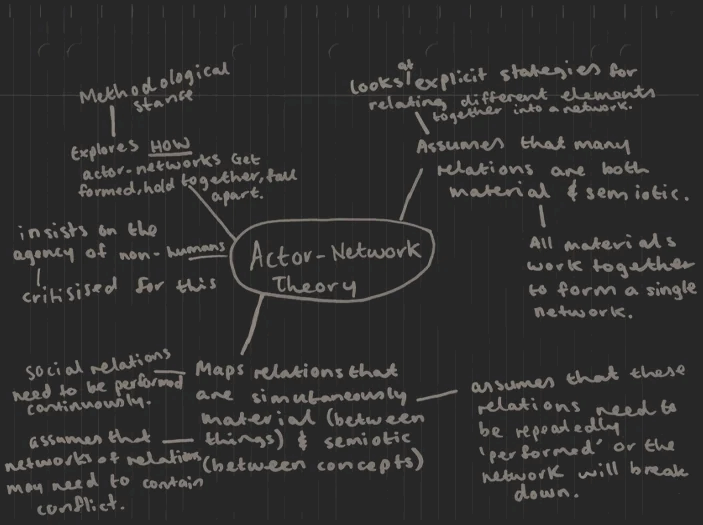
ACTOR–NETWORK THEORY: READING ARCHITECTURE AS A RELATIONAL NETWORK
Actor–Network Theory emerged from sociology and science and technology studies through the work of Michel Callon, Bruno Latour, and John Law. The theory understands any system as a network formed through relations among human and non-human actors. People, technologies, institutions, objects, infrastructures, and environments all participate in shaping how that network operates.
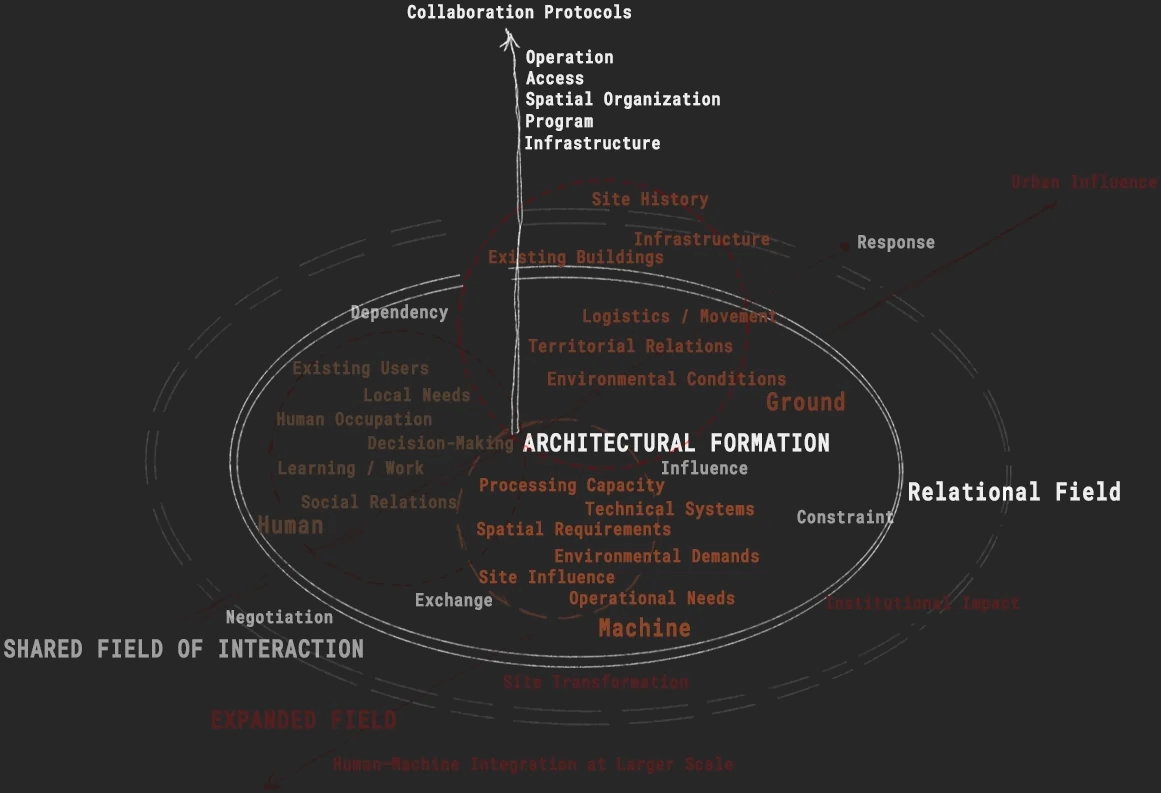
In ManMaTIC, this framework was used to identify humans, machines, data, infrastructure, institutions, and environmental conditions as interconnected actors. These actors were then organized within three primary components—human, machine, and ground—forming the relational field through which the project could be examined.
Within this field, ground carries the site’s environmental, infrastructural, historical, and territorial conditions. Machine introduces operational, spatial, and technical requirements, while human brings occupation, needs, judgment, and social use. The field also extends beyond the immediate site, connecting these interactions to wider urban and institutional effects.
At this point, the project had established the actors and the relationships between them, but it had not yet produced an architectural response. The next question was: how could these relationships be translated into program, space, and operation?
06 / OPERATION
MACHINE BEHAVIOUR: THE BUILDING AS AN OPERATIVE MACHINE
Machine Behaviour provided the framework through which the relational field could be read architecturally. Its four dimensions—mechanism, development, function, and evolution—examined how the relationships among human, machine, and ground operate, develop, produce function, and change over time. This reading generated the program, spatial relationships, and operational logic of the proposed typology from the conditions of the field. It also established the conceptual basis for understanding the building as an architectural machine connected to its ground.

Actor–Network Theory identified the actors and relationships shaping the project, while Machine Behaviour translated how those relationships operate, develop, produce functions, and change over time. Together, they established the conceptual framework through which ManMaTIC could be developed architecturally.
A fixed thesis document was therefore insufficient. ManMaTIC required a living framework capable of absorbing new knowledge and translating it into architectural criteria and design decisions. This need led to the development of the ManMaTIC Field.
07 / FIELD
THE MANMATIC FIELD
A prospective knowledge engine for studying and testing human-machine integration.
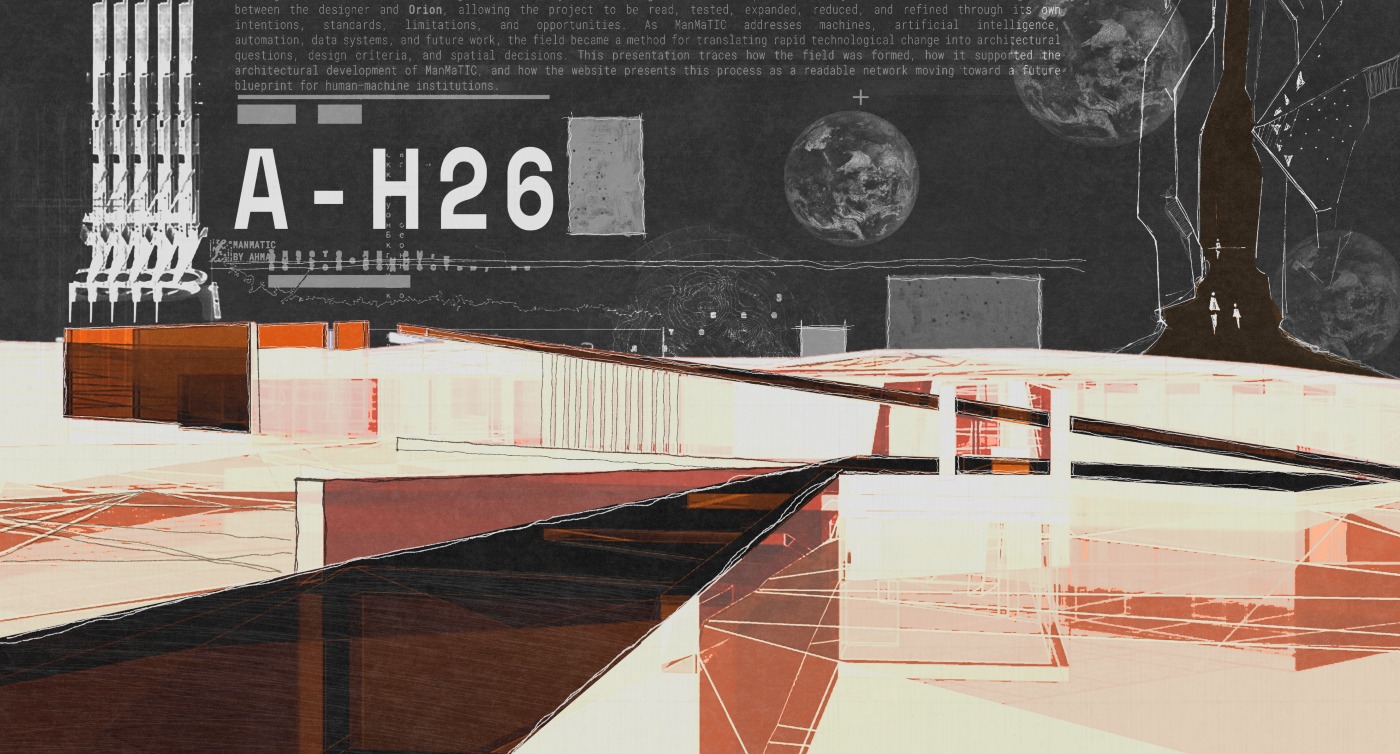
ManMaTIC is the conceptual position and operative logic through which a prospective institutional typology for human-machine collaboration is developed. The ManMaTIC Field is the knowledge and design environment through which this position is examined, tested, and translated into architectural decisions. It connects the research corpus, thesis framework, case studies, evaluation criteria, design iterations, and final outputs within one environment. This allows architectural decisions to be traced, tested, compared, and refined against the project’s aims, site conditions, and constraints.
EXPLORE THE MANMATIC FIELD →
08 / METHOD
BUILDING THE FIELD
EVIDENCE → THESIS → CRITERIA → DESIGN TESTS → FIELD
09 / EVIDENCE
RESEARCH CORPUS
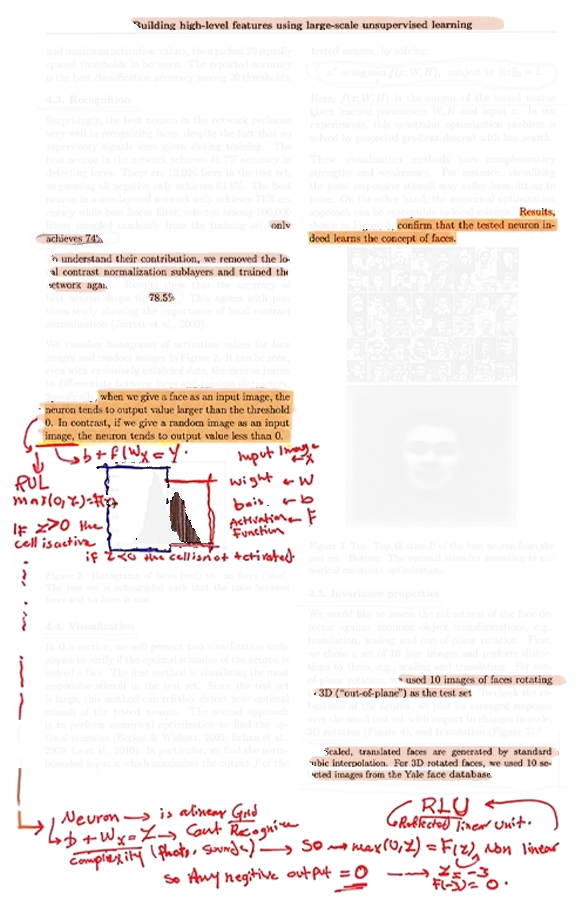
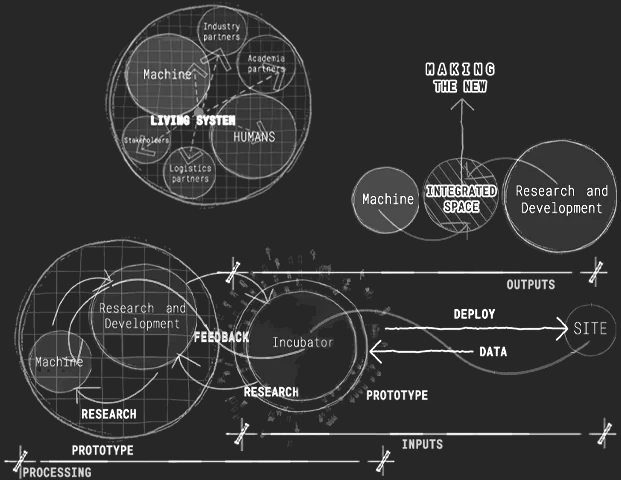
ManMaTIC began with a research corpus of approximately 120 pages, synthesized from nearly 50 sources on machines, automation, artificial intelligence, future work, labour transformation, technological acceleration, and the changing role of humans within machine systems.
Before becoming an architectural proposal, ManMaTIC was developed as a field of research: a way to understand the subject, its tensions, and the role architecture could play within it.
10 / THESIS
THESIS FRAMEWORK
The second layer translated the research corpus into the architectural thesis framework. It combined future-oriented analysis, problem definition, site and context analysis, case studies, theoretical frameworks, program development, and system relationships.
The research first established the project’s direction. The thesis then tested and developed this direction through the specific context of Aqaba—its history, logistics, surrounding systems, users, and projected impact. Through this process, ManMaTIC evolved from a general investigation into a site-specific architectural response.
11 / CRITERIA
EVALUATION CRITERIA + FIELD
The thesis framework was translated into a set of evaluation criteria addressing site linkage, functional relevance, human-machine legibility, protocol logic, technical capacity, spatial clarity, and future adaptability. Together with the research corpus, site analysis, and case studies, these criteria formed the ManMaTIC Field
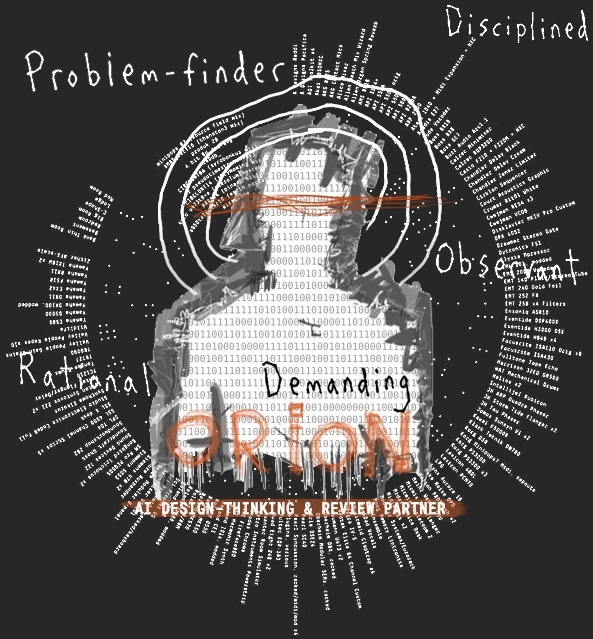
Within this field, Orion operated as an AI design-thinking and review partner. It compared alternatives, identified limitations, and revealed opportunities through the project’s own criteria. MANMATIC.INSTITUTE became the visible interface through which the project’s research, criteria, discussions, references, and design outputs were traced and organized.
12 / DIALOGUE
THE FIELD IN PRACTICE
Author-Led Design Dialogue
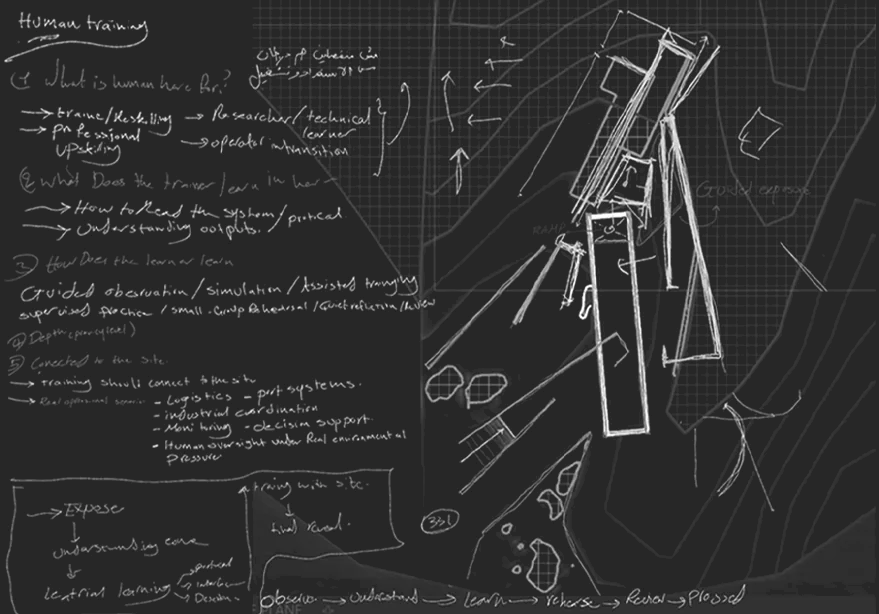
Once constructed, the field operated as an active design environment rather than a passive archive. It supported the development of architectural decisions through drawings, boards, notes, and early design studies. The designer established the project’s intentions, priorities, and final decisions, while Orion reviewed proposals against the research, criteria, constraints, and spatial logic embedded in the field. Each proposal could therefore be examined through form, function, movement, hierarchy, user experience, visibility, control, and spatial meaning, while architectural authorship remained with the designer.
13 / FIELD APPLICATION
FIELD APPLICATION:
PROTOCOL PORT
A Thermodynamic Protocol Port for Algorithmic Logistics in Aqaba
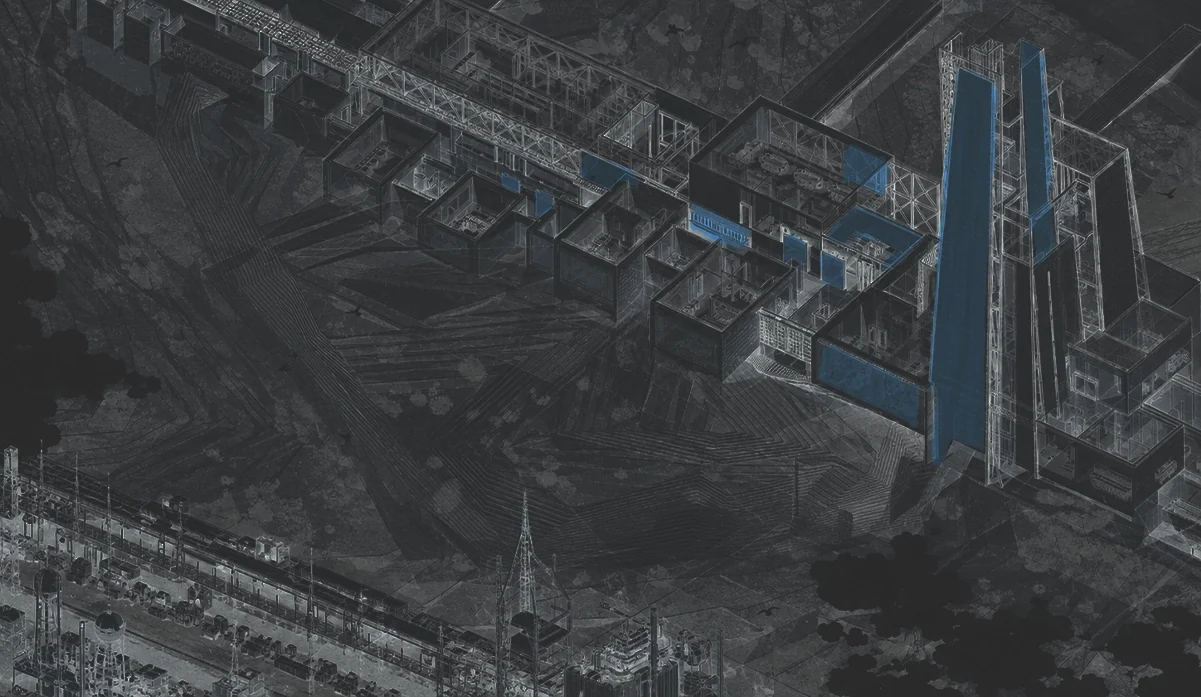
Protocol Port applies the ManMaTIC framework to Aqaba’s logistics territory, reading the port as a field of exchange between people, goods, data, energy, heat, and infrastructure. It brings students, researchers, developers, logistics actors, and intelligent systems together to study existing operations, develop new protocols, and test them within the site. The building’s spatial and thermodynamic systems respond to Aqaba’s climatic and operational conditions, making architecture part of the logistics process itself.
- YEAR
- 2026
- SITE
- Aqaba, Jordan
- TYPE
- Human–Machine Protocol Environment
- FUNCTION
- Human–Machine Collaboration for Logistics Protocol Development
- USERS
- Students, Developers, Researchers, and Logistics Actors